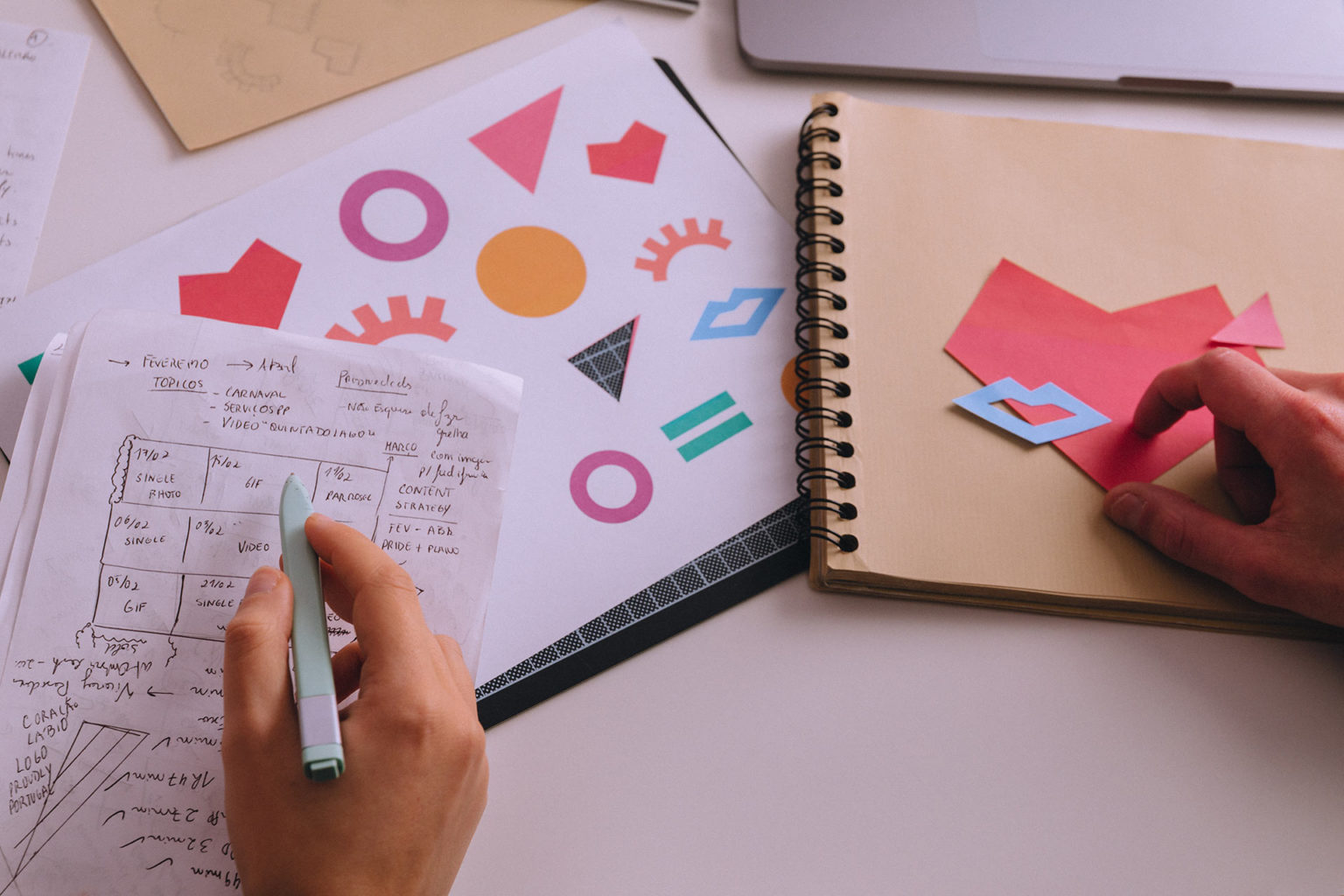



Every great design looks inevitable. That sense of rightness, when everything feels in place, doesn’t happen by chance. It’s the result of structure, of invisible logic, of hundreds of micro-decisions that align around a clear idea.
But most of that happens before anyone draws a line.
There’s a moment, before the creation begins, when we decide what we’re actually building. That’s the real creative act. Because if we start without that vision, even the most beautiful pieces won’t fit together.
In the world of brands, this invisible moment has a name: strategy.
Brand strategy is not an extra step; it’s the first act of coherence. It’s the point where meaning begins and where every good design finds its purpose.
The Illusion of Spontaneity
We live in an age that celebrates the finished object: the striking logo, the fluid interface, the campaign that looks effortless.
But what most people never see is the scaffolding behind it — the layers of thinking that make that simplicity possible.
Great design looks spontaneous only because the order beneath it is solid. Yet many brands still try to skip ahead. They rush into execution: new websites, refreshed identities, “quick wins”. Without asking the only question that matters: what are we building, and why?
Without that essential step, the design process can quickly go down a rabbit hole of endless iterations with no clear decision path ahead.

Learn the manual before you build the bricks
Imagine yourself at a table on a quiet winter Sunday afternoon with an exciting LEGO set to build. You marvel at what you’ll soon assemble. A structure that, piece by piece, will take shape over the next few hours.
You open the box, explore the numbered sacks that hold the bricks, and reach for the instruction manual. Following it, you open Sack 1, organize the pieces, and begin. The first block takes form. It’s far from the end result, but you know that if you keep following the sequence, what now feels abstract will soon resemble the exciting image you saw on the box.
No one starts a LEGO set by opening all the sacks at once and mixing every piece together. That would be an inefficient, even absurd, choice. You follow the sequence. Sack 1 builds the base. Sack 2 adds the framework. Sack 3 brings the recognisable form. Only after some stages are complete do the next make sense.
Brand building works the same way.
The ultimate vision, a strong, coherent brand, can only be achieved after structuring its construction manual: strategy. Each stage of the building process results in a brand unit, a defined set of pieces designed to work together. When you open the right sack at the right time, the process feels fluid, inevitable, satisfying.
When you don’t, chaos follows.

Brand Units: the invisible architecture
Every brand is made of essential units, distinct yet interdependent: brand foundations (values, mission and vision), verbal identity, core visual system, visual universe, motion and audio, brand documentation, collaterals, spatial design, ui/ux, campaigns, branded content, and more. Some of these units are structural, others belong to the exponentially growing set of brand touchpoints – the moments where the brand expresses itself and interacts with its audience. Yet we can loosely organize them into four different categories:
- Brand Pillars – define what the brand stands for: the solid base where everything connects.
- Narrative – shape how the brand speaks and feels: story, tone, truth.
- Expression – translate meaning into visual and emotional form: systems that organize the identity
- Experience – bring the brand to life across touchpoints: physical stores, website, motion, environment, interaction.
Units build on top of each other. It’s difficult to articulate a strong narrative if your foundations are vague. Design becomes a coherent system when the story it tells is defined. And no matter how polished the visuals, you can’t create a great brand experience if the system itself is unstable.
When brands fail, most times it’s not because they lack creativity. But because its components are poorly orchestrated, misaligned with the business and its operations.
Strategy is the grand orchestrator of it all.
Within this metaphor, the brand manager becomes the master LEGO builder: the one who knows that mastering the rules is the key to building a solid, scalable brand that supports and drives business growth.
Order matters — but not in the way you think.
It’s a familiar scene: a client just wants a new logo because “the old one feels outdated.” Or a website redesign because “the brand needs to look more premium.” But underneath those requests lies a deeper truth: they no longer know how to express who they’ve become.
Designers, eager to help, start sketching. But without a clear definition of purpose, promise, and positioning, the outcome is guesswork.
Design can’t correct strategic ambiguity; it only hides it temporarily behind a layer of makeup. Sooner or later, the cracks show: in messaging, in culture, in growth.
Still, it’s not always realistic to build everything in perfect sequence. The ideal process of brand development is seldom aligned with business reality.
Brands, like businesses, evolve and rebrand under different conditions of risk and maturity.
- A startup often operates in motion: testing, pivoting, and iterating its way toward product–market fit. At that stage, it rarely makes financial sense to invest in a fully structured brand system from day one, while direction remains fluid. The goal is agility, not polish. The brand becomes a living hypothesis. It should evolve as fast as the business does.
- Transforming brands live between momentum and maturity. They’ve proven their product, found their audience, and built some equity, but the story that got them here can’t take them further. Growth now demands an aligned vision, consistent language, and a scalable system. At this stage, strategy isn’t about starting over; it’s about reassembly: taking what exists and organising it into a structure that can grow.
- Mature companies, however, play a different game. Growth multiplies complexity: new markets, products, teams, and expectations. What once served as a temporary identity becomes a bottleneck. Without a clear strategic spine, every department interprets the brand differently, and coherence erodes. At scale, this misalignment becomes costly: in consistency, credibility, and trust. Brand strategy, at this point, is governance.
Understanding how to solve this puzzle, where different units must fit together, make sense and build meaning over time is a challenging, but deeply exciting endeavour. That’s the true goal of a carefully articulated brand strategy.
When strategy precedes design, every decision becomes a continuation of a clear idea. Constant reinvention is the most expensive brand habit of all.

The Moment of Wholeness
I love building LEGO sets. Spending a full afternoon, music in the background, fully immersed in the search for small pieces and the quiet logic of how they fit together. When you finish building something complex, a quiet satisfaction settles in. You forget the numbered sacks, the instructions, the patience it took to get there. You just see something complete, a form that feels inevitable.
That’s how great brands work. You don’t see the framework beneath the surface, you just feel coherence. Every element speaks the same language. Every detail belongs.
It’s tempting to think that magic comes from inspiration. It doesn’t.
It comes from order and discipline. From respecting the sequence that transforms chaos into meaning.
Design is not the opposite of strategy, it’s strategy transformed into something tangible. The better the structure beneath it, the more effortless it looks above.
The world doesn’t need more noise, or faster design. It needs brands that know why they exist before deciding how they look.
So build your brand sack by sack. Define before you design. Envision before you create.
Because in the end, the difference between randomness and mastery is simple — it’s how you assemble it.
Transparency disclaimer
Article written by Nuno Tenazinha.
Illustration cover by Brígida Guerreiro (aka anotherbrigida).