




Everyone understands you can’t start building a house by the roof, right? You should, at the minimum least, build the pillars first. Well, it’s the same with branding. Let’s dive deeper into detail and see what the difference between a logo and a full brand identity is and why branding matters more than you think!
“We can do the branding later, right now we urgently need the logotype.” – an esteemed client who clearly didn’t understand the process
It’s still one of the most common misconceptions in business. People come to a branding agency, even an award-winning one like KOBU, asking for “just a logo”, but what they actually need is a comprehensive brand identity that gives their business a personality, allowing it to communicate consistently and cause an impact.
The logo is the star. The brand identity is the universe.
Your logo is your visual handshake. It’s the simplest, most recognisable visual mark of your business. Like a doorway, it’s the entrance to something much bigger and more complex. Think of the Nike swoosh, the Apple bitten fruit, or Instagram’s minimal camera icon: they’re all clean, clever, and iconic symbols that represent so much more.
So, if your logo is that entry point, your brand identity is the entire building that follows, both conceptual and concrete. It’s how your brand looks, on digital and offline; how it sounds, both on social media captions and on radio jingles; and how it behaves across every touchpoint, whether on your website, your packaging, your TV ads, or even the way your team answers the phone. A comprehensive brand identity helps you draw attention to your product or service, but more importantly, it helps to build trust.
The Nike swoosh is iconic because you immediately think “Just do it.” and suddenly the brand message resonates. Unboxing an Apple device is a desirable brand experience that very few companies have mastered so well, and it’s a relevant part of the excitement when you buy a new product. These aspects are not random; they are carefully thought through in the context of brands to convey messages, spark emotions, and engage with the receptor.
Understand that a good logo might make you identifiable, recognisable, but not necessarily memorable because people appreciate logos, but ultimately they fall in love with what they represent. So, a comprehensive identity ensures your brand is not only recognisable across all channels but also that your message is engaging, that it feels coherent and meaningful. It embraces your logo, giving it context and helping propel your message. Without it, your logo is just a nice drawing with nowhere to live.
What does a brand identity actually include?
Investing in a full brand identity means building an entire ecosystem where the logo is certainly the centrepiece, but many other elements, visual and non-visual, also populate that ecosystem. To make them all work harmoniously toward your goals, you need actionable rules and guidelines. Enter the brand book: they are essential as operational manuals, providing all the tools and guidance needed to bring your brand to life.
1. The logo is the protagonist
A brand book usually starts with the logo suite, which includes not only the main logo but also all its alternate versions in colour and black & white, horizontal and vertical layouts, icon or monogram formats, and more, all prepared for use across different media and applications.
2. A diverse colour palette is essential
Next comes the colour palette, a truly fundamental element. Most of people understand that a brand needs primary and secondary colours, but far fewer recognise the importance of accent and neutral tones to allow your brand to live in different contexts and adapt to different communication needs. A well-structured colour palette reflects the brand’s personality and conveys its message consistently in every situation.
3. Typography speaks beyond words
Another tool that’s often underestimated is typography. Carefully chosen or even custom-designed headline and body fonts can be key to positioning your brand, especially when its visual universe is minimalist. Using standard fonts is fine, but investing in customised typography can make a world of difference, as typography alone can express your tone of voice, convey mood, and create instant recognition.
A customised and charismatic typography can even become the main brand identity vehicle. Take our client, THE V, as an example. As a real estate development brand, their identity is clean, monochromatic and minimalistic. Not much to see, really. But you know how they stand out in such a saturated market? Through a hero typography, designed by KOBU Foundry, that translates their unique product and sophisticated brand promise of an “Exceptional Living”.
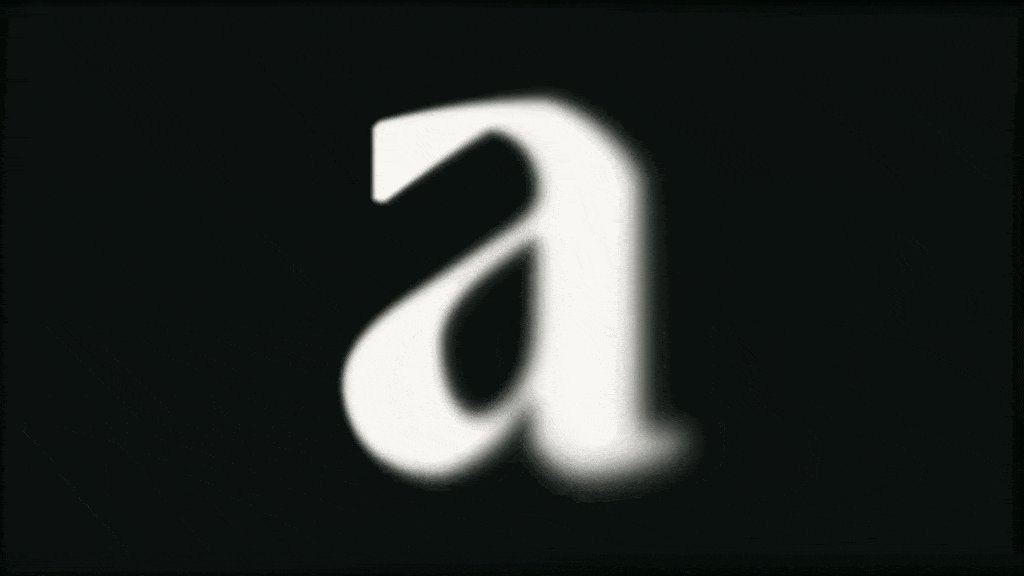
4. The power of symbols and unique key visuals in brand charisma
Depending on the brand, the brand book may also include rules and guidelines for key visuals, i.e. distinctive elements that visually embody the brand. These might be a specific symbol, line, pattern, or even a character that represents the brand in a memorable way. Think of Milka’s purple cow or Ronald McDonald: you don’t need to see their logos to know what brand they belong to. But that doesn’t mean they’re used randomly. Each has its own strategic guidelines to ensure coherence and consistency.
We’ve done it with our client Skullpture: their core business is facial bone surgery, and they position themselves in the affluent segment. Naming and business were aligned around a common visual element, the skull, so we made it their key visual asset and populated their brand (especially the website) with a golden and captivating skull.
You see how Skullpture is a perfect example of how innovative health branding works and certainly pays off, as a distinctive and memorable key visual can indelibly imprint a brand in the mind of the audience, even in a traditionally conservative sector.
Key visuals, photography, illustration, and iconography are all brand assets that come with their own usage rules. Imagery style, along with clear dos and don’ts, helps brand users produce communication materials that maintain visual cohesion and reinforce consistent behaviour across all touchpoints.

5. Find your tone of voice
The same applies to tone of voice and messaging. Every brand communicates with a distinct personality: some sound empathetic, others pragmatic; some use humour, others rely on a more direct approach. Vocabulary, sentence structure, and overall speech rhythm all play a role. What matters is that these aspects are clearly defined and consistently applied across every channel. How your brand sounds, what it says, and how coherent it feels all help affirm its positioning and build long-term recognition.
6. Brand tools and guidelines ensure consistency
Finally, it’s crucial to include a comprehensive set of brand applications with their respective development and implementation guidelines. These typically cover templates for social media, visual layouts, presentations, stationery, packaging, signage, and any other materials relevant to your brand’s context.
A brand identity is more than a logo
In conclusion, an effective brand identity is like a living organism where every element, from logo to language, works together seamlessly. If done right, your audience will recognise you instantly by your visual and verbal style, even before they see your logo.
What’s our role as a creative agency?
How can we partner with you to go through the logo-to-identity journey? And should you even do it? As a creative branding agency, we don’t jump straight into design. We begin by getting to know you and your team, your product or service, your way of working, your business goals, and your ambitions. This discovery phase allows us to define a brand strategy that truly fits your reality and your objectives.
Once the strategy is in place, we move into crafting a cohesive brand identity universe that works seamlessly across every touchpoint. From customised websites to creative content and advertising campaigns, we can design everything your brand needs to live, perform, and grow.
What does that actually mean? It means you’ll be ready to introduce your brand to the world with a visual and verbal identity that communicates reliability and purpose. It means every time people encounter your brand, they’ll see what you stand for, and if you stay consistent, recognition and loyalty will follow.
Why can’t you just do your own brand design
Today’s digital tools like Canva are brilliant. And yes, AI-powered platforms have made it faster and cheaper to produce visuals. These technologies democratise design and help small businesses create decent-looking materials in no time. But even the smartest AI can’t think strategically for you. It can’t analyse your market, understand your nuances, or fine-tune brand visuals and messaging that truly reflect who you are.
An authentic brand identity is built on research, psychology, and positioning. It involves understanding complex variables from audience perception to emotional triggers and translating those insights into a brand that actually means something for its audience. Branding isn’t about simply making things look good; it’s about making them work effectively, communicating your story and your values to real people.
When we design your brand identity, you’ll face questions like “Who are you trying to attract?”, “What do you stand for?”, “How do you want people to feel when they interact with you?”, “What makes you different from your competitors?” and these questions will poke your mind and make you reflect.
We’ll help you make conscious choices and take a stand, because great brands don’t happen by accident, they require an insightful process anchored on brand strategy. As an experienced branding agency, we take those insights and transform them into a visual and verbal identity that makes your brand unmistakably yours. No template can do this.
And now you think: “But I’m Just a Start-up — Can’t I Start Small?“
Of course! Not every brand needs a 50-page brand book from day one. The key is to see branding as a long-term investment, not a one-off design task.
If you’re just getting started, it’s perfectly fine to begin with a minimum viable identity, i.e. a logo, a colour palette, aligned typography, and a few simple rules to ensure consistency. We’ve developed a couple of branding projects for start-up brands, so we know what we’re talking about. See branding of Nerai Bio, a start-up working in the biotech sector: Their entire brand identity was built considering their business potential for growth and expansion: tool-ready and visually striking. So, think of your brand as a living organism that grows, learns, and evolves over time.
As your business develops, your brand will naturally need to evolve too. Stay sharp: when the time to rebrand comes, there will be signs! That’s how the most enduring brands stay relevant and memorable. Their strength lies not only in their business but in their multidimensional identities, systems that have been carefully layered and refined over time. Think of Coca-Cola’s unmistakable red, the Pringles tube, or McDonald’s signature smell. These weren’t accidents; they were deliberate additions to their brand universes, built and improved through intentional evolution.
So… Do You Need a Logo or a Brand Identity?
If you only need something quick for a one-off event or a short-term project, then yes, a simple logo might do the trick (and, honestly, we’re not the right partner for that).
But if you’re building a brand that’s meant to last, one that aims to connect, compete, and grow, then you need more than just a mark. You need a complete identity system that works consistently across touchpoints and tells your story in a way people will remember.
If you’re ready to stop blending in and start building recognition that lasts, it’s time to think beyond the logo. Invest in your brand identity and let every element, visual or verbal, express your purpose, your clarity, and your style.
Transparency disclaimer
Article written by Isabel Evaristo.
Illustration cover by Brígida Guerreiro (aka anotherbrigida).