



Hospitality and tourism have long been shaped by a familiar visual and verbal language, especially in the high-end segment. Exclusive locations, pristine beaches, smiling sta?, elegant rooms, and promises of “unforgettable experiences.” While these elements may be all true and still hold value, they have also created a sea of sameness. In a category built on desire and escapism, brands often end up blending into one another. Ironically, in their pursuit of perfection, they become forgettable.
That is why the unexpected becomes a powerful strategic tool. Brands that dare to subvert expectations through humour, irreverence, metaphors, or unconventional tones of voice can carve out distinctive positions in the minds of their audiences. Because, in the middle of all that polished predictability, what can be more memorable than a witty personality?


The Problem with Playing It Safe
Tourism and hospitality brands tend to default to aspirational clichés. “Luxury redefined,” “a home away from home,” or “where dreams come true” are the type of phrases so overused that they have lost their meaning. These expressions aim to reassure, but their lack of impact means they rarely differentiate.
Memorable brands often thrive in contrast between expectation and surprise, comfort and curiosity, elegance and playfulness. Without that tension, brands’ communication becomes bland and boring because it keeps on repeating itself around an exhausted formula.
Subverting Luxury Codes in Hospitality
Luxury hospitality has traditionally relied on restraint, elegance, and distance. But times are changing, and we are witnessing the rise of new audiences that come with different interests. This shift in audience profile has pushed a new generation of brands to challenge traditional luxury codes by introducing unexpected tones that are playful, bold, even slightly irreverent, without compromising quality.
This evolution is not exclusive to hospitality alone. Across luxury categories, renowned brands such as Jacquemus and Gucci have shown that exclusivity no longer depends on more traditional interpretations of the segment. Today, luxury is also signalled with confidence through humour, surrealism, cultural fluency or a lighter, more self-aware tone.
Luxury brands also feel the need to adapt their approach to communication so that they can meet modern audiences. Particularly, younger travellers and consumers value authenticity over formality, reflecting a broader cultural change and a new penchant for brands that feel human and even “low-fi”.
Humour as a Strategic Asset
Humour is one of our favourite communication tools at KOBU Agency, and we believe it is still underutilised in tourism and hospitality, particularly in the high-end segment, largely due to a perceived risk of undermining sophistication or exclusivity. However, it is our belief that when executed with precision and wit, humour can humanise a brand and create emotional proximity.
Consider brands that use self-awareness to their advantage. Instead of claiming perfection, they acknowledge quirks, limitations, or even industry clichés. This approach signals confidence as it not only tells the audience that the brand knows the rules and chooses to bend them, but it also adds a kind of firm vulnerability that empowers the brand.


Redefining Perceived Value
Take Moxy Hotels by Marriott, for example. Their positioning intentionally explores the fact that they have small rooms. The brand openly says, “At Moxy Hotels, we don’t take ourselves too seriously. But we’re seriously into showing you a good time with small but smart rooms, stylish communal spaces and bars you’ll love”. It’s unusual, and it’s clever. The brand takes a potential weakness into a positioning statement and completely shifts the narrative from limitation to intention.
Tourism boards such as Visit Oslo have shown that humour can outperform traditional destination storytelling. For instance, their promotional campaign video “Is it even a city?” uses a counter-intuitive and ironic tone to show us how great of a place Oslo is. It’s an unusual approach that respects and flatters the destination while bringing it to the attention of modern audiences with originality.
The same principle applies closer to home. In our work with Turismo do Porto e Norte, campaigns such as “The Majestic Adventures of Ofelia de Souza” and “The Big Trend by Ofelia de Souza” explored a more character-led, self-aware and culturally textured mode of destination communication. Rather than relying on scenic perfection alone, the work sought to build memorability through narrative personality, showing that tourism branding becomes stronger when a place dares to sound like itself.
Calculated Risk for Strategic Reward
Breaking stereotypes is not without risk. Humour can misfire, and an edgy tone of voice can alienate certain audiences. However, the greater risk in today’s saturated market is invisibility.
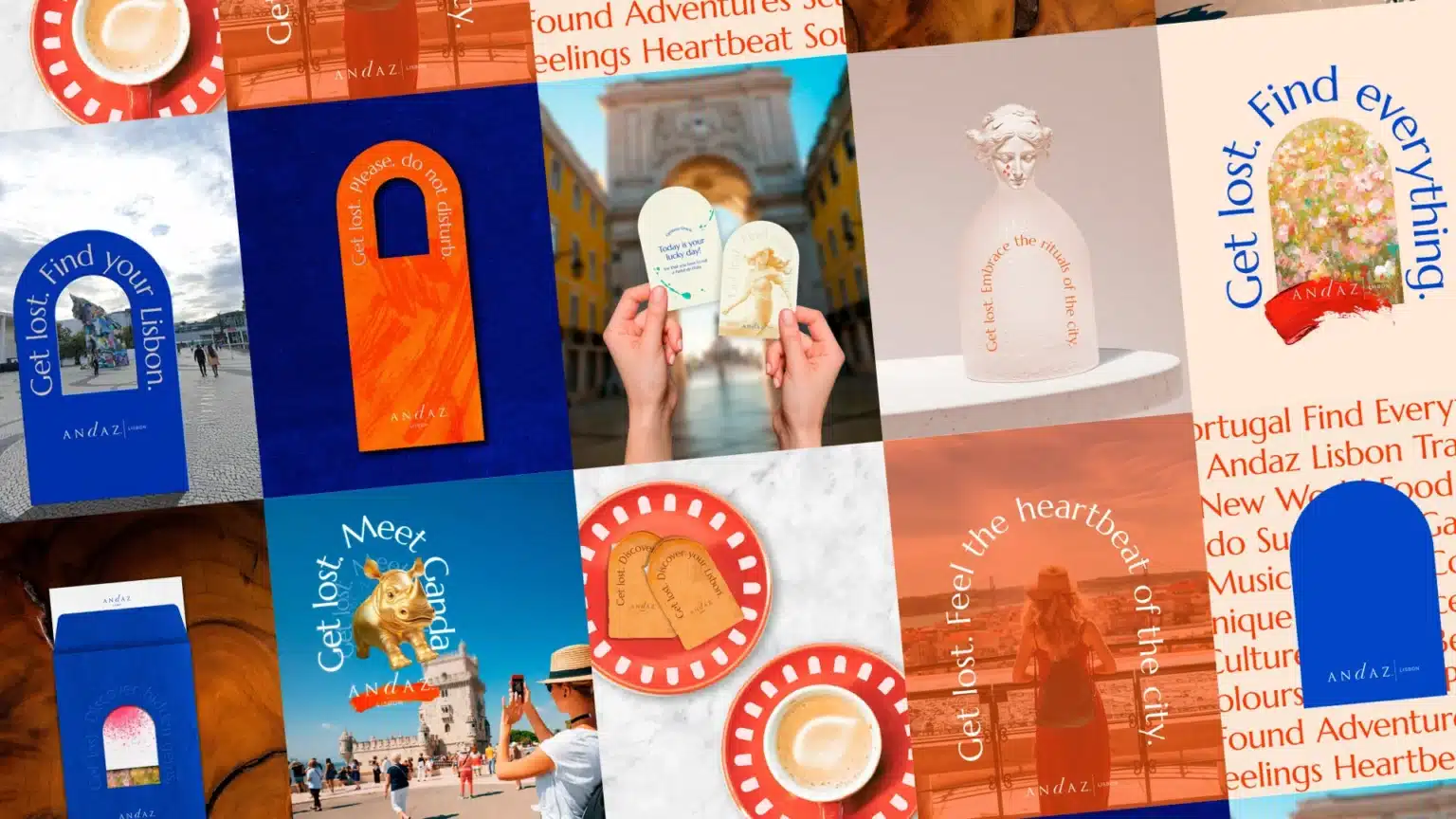
At KOBU Agency, we had to deconstruct those fears when we worked on a branding project with Andaz, the internationally recognised luxury hospitality brand from Hyatt. When they landed in Portugal to open their first unit in sunny Lisbon, their briefing was clear: Andaz Lisbon’s identity should be about the city’s allure, its millennial history and undeniable cultural vibe.
We crafted a message that planted Andaz Lisbon’s roots at the heart of Lisbon, intertwining legends and facts from the past, present and future to ground their hospitality promise and elevate the guests’ expectations about this unique city.

As we wrapped the concept in a provocative communication statement, we introduced a deliberate tension: “Get lost. Find your Lisbon.” It captured the spirit of the hotel and the city with a boldness rarely seen in high-end hospitality. Yes, we were bending category norms, maybe to the limit, but for the sake of strategic disruption. The claim felt provocative, but never careless, drawing its strength from that intentional fine-tuned balance. We catered to the modern, curious and culturally engaged guest with a statement that reframed luxury not as a cold and distant concept, but as a premium discovery experience.


Memorable Expression Spurs Meaningful Connection
Ultimately, the goal of branding in tourism and hospitality is not just to attract attention, but to unveil a deeper meaning and bring added value. The most memorable brands are those that make people feel something, be it surprise, delight, curiosity, or reward.
By embracing the unexpected in communication, hospitality and tourism brands can move beyond generic promises and create distinctive identities. They can turn limitations into narratives, traditions into experiences, and language into a tool for connection.
Today’s travellers are constantly searching for something new and diferent. The greatest opportunity for brands may lie not in displaying what they offer, but in how they choose to use a creative flair to unapologetically express themselves.